What the world needs now, more than ever, is peace and people to help achieve that.
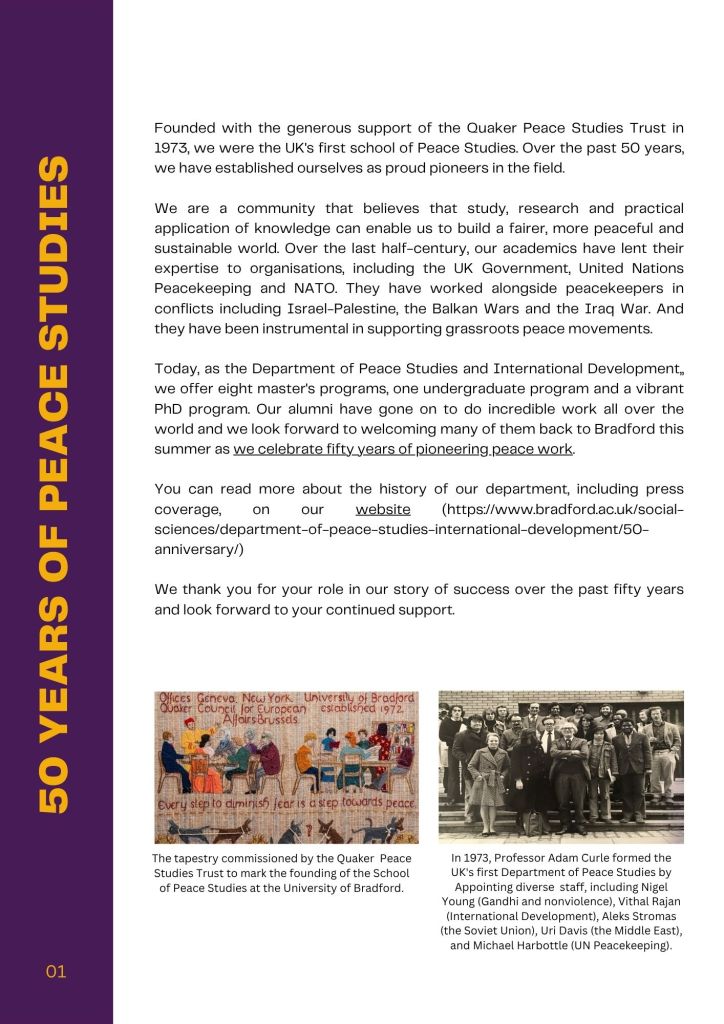
In 1972, the Quaker Peace Studies Trust (QPST) was established to raise £75,000 (equivalent to £785,000 today) to matchfund money from the University of Bradford to establish the first chair of Peace Studies. This was raised in just 10 weeks. Adam Curle was recruited from Harvard University to become the first professor of Peace Studies in the new Department of Peace Studies in 1973.
QPST has supported Peace Studies at Bradford through many challenges, both external and internal, ever since. It has raised funds to support research into, and the teaching of, peace studies for over 50 years and intends to do so for another 50 years.
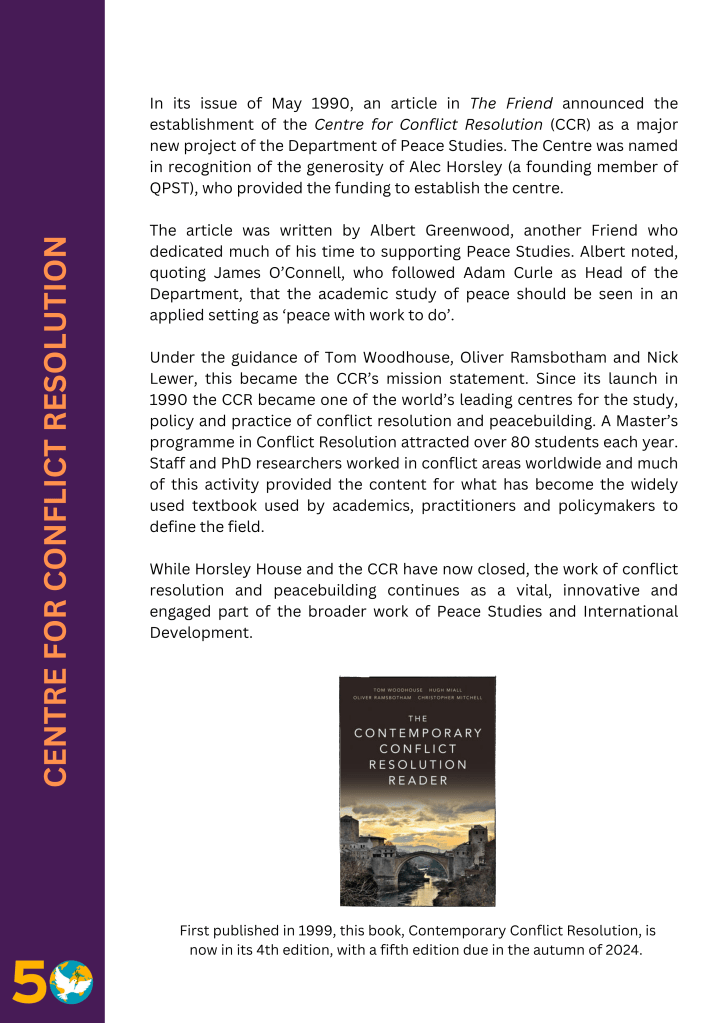
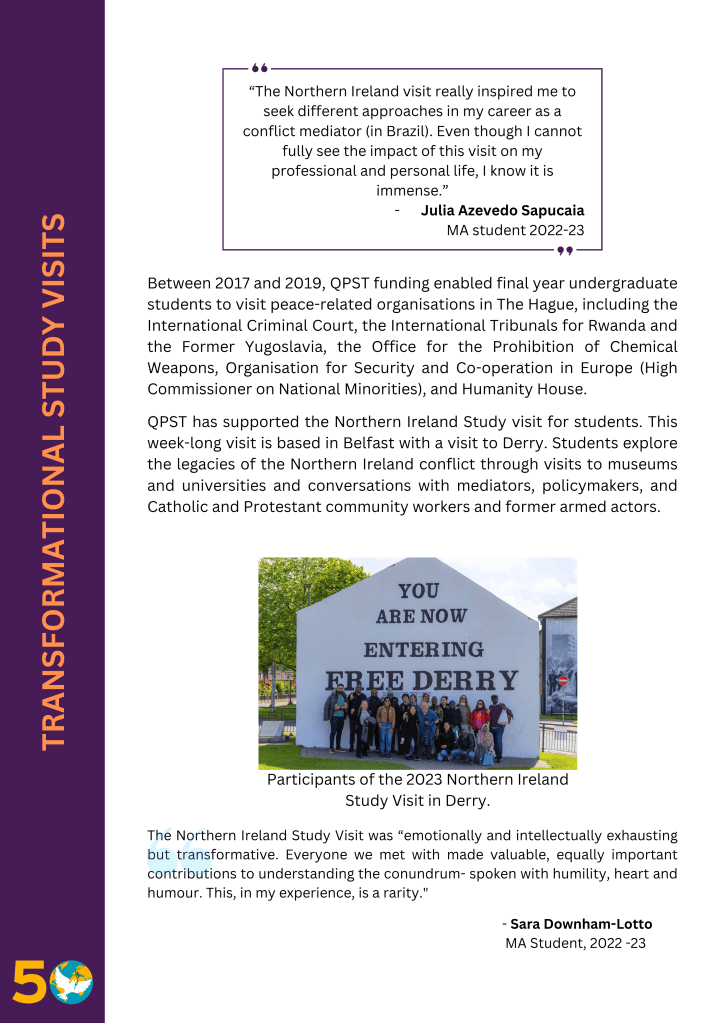
Amongst many things, QPST financed a place to house a Centre for Conflict Research, supported research by staff covering issues ranging from the biological and toxin weapons treaty to peace on the streets of Bradford. More recently, it focused on enhancing the skills and hands- on experience of students studying peace through activities such as study visits, immersive and creative activities and peace education.
From its founding in 1973, the then School of Peace Studies has seen many ups and downs. During the late 1970s, Mrs Thatcher famously quipped “Has that peace studies problem been dealt with yet?” due to its stellar research on nuclear disarmament. She sent an inspector to try and find grounds to shut down the department – and failed.
Under the leadership of James O’Connell in the 1980s, Paul Rogers and Oliver Ramsbotham in the 1990s, the Department of Peace Studies became a globally recognised centre for peace studies, international relations, and security studies.
However, the 2008-09 Global Financial Crisis and the subsequent austerity measures hit universities across the UK. The changing winds of policy priorities affected funding availability. As part of university-wide curriculum review, in 2016, the Department of Peace Studies merged with the then Bradford Centre for International Development to form the new Department of Peace Studies and International Development (PSID).
Emerging from various challenges including the Covid-19 pandemic, the Department is today in a strong position with a BA programme, eight Masters programmes spanning the disciplines of peace studies and development studies, covering international relations, conflict resolution, resilience, economic development, sustainable development, and project management; and an active PhD programme. In a typical year, students from around 50 countries study here.
PSID currently have an incredibly talented and diverse community of 20 academic staff members and a vibrant student body. As a truly multi-disciplinary department, we have expertise and a track record of innovative research in applied and highly policy-relevant areas of research. Several emeritus professors continue to be active in research as well as in public communication.
Read more about 50 years of Peace Studies at the University of Bradford:
‘They thought we were all communists’: Bradford’s peace studies department turns 50, The Guardian
UK’s first Peace Studies turns 50, University of Bradford website
Peace Studies at Bradford University – Reflections on Fifty Years, Prof. Paul Rogers in Quaker Studies.
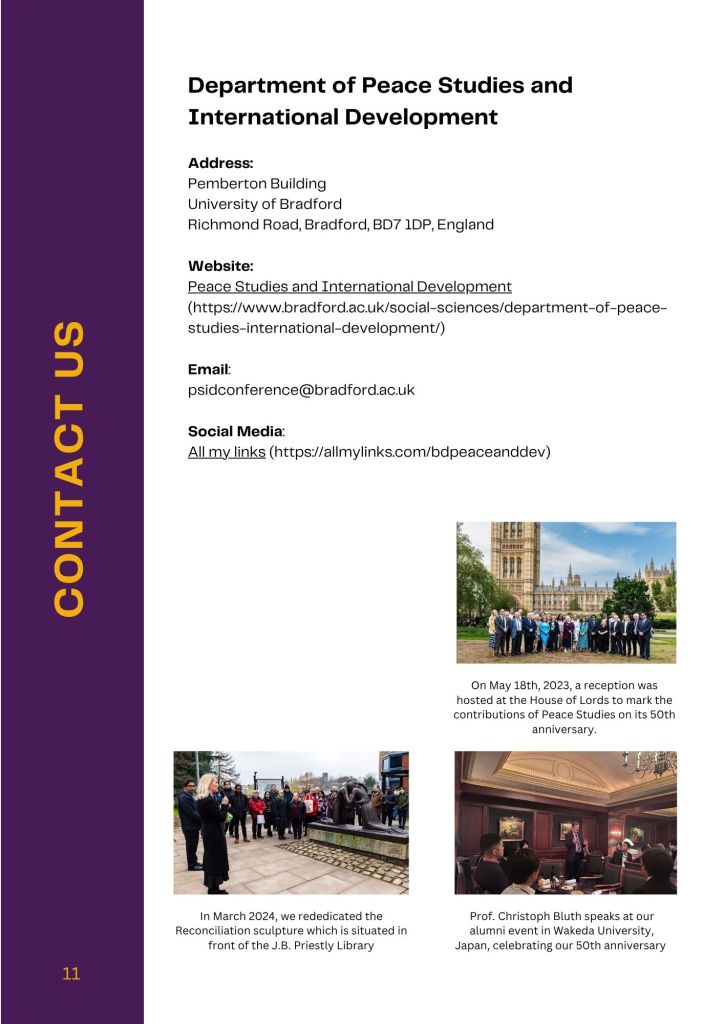
See here for the exhibition celebrating the 50th anniversary which was featured in the University of Bradford and Friends House in London
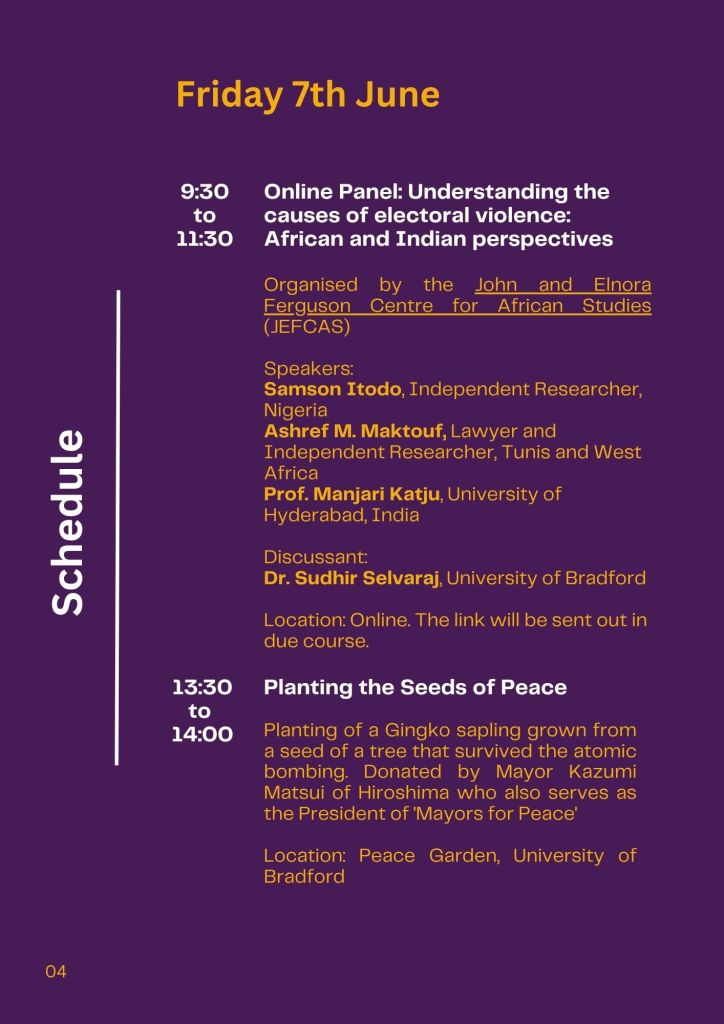
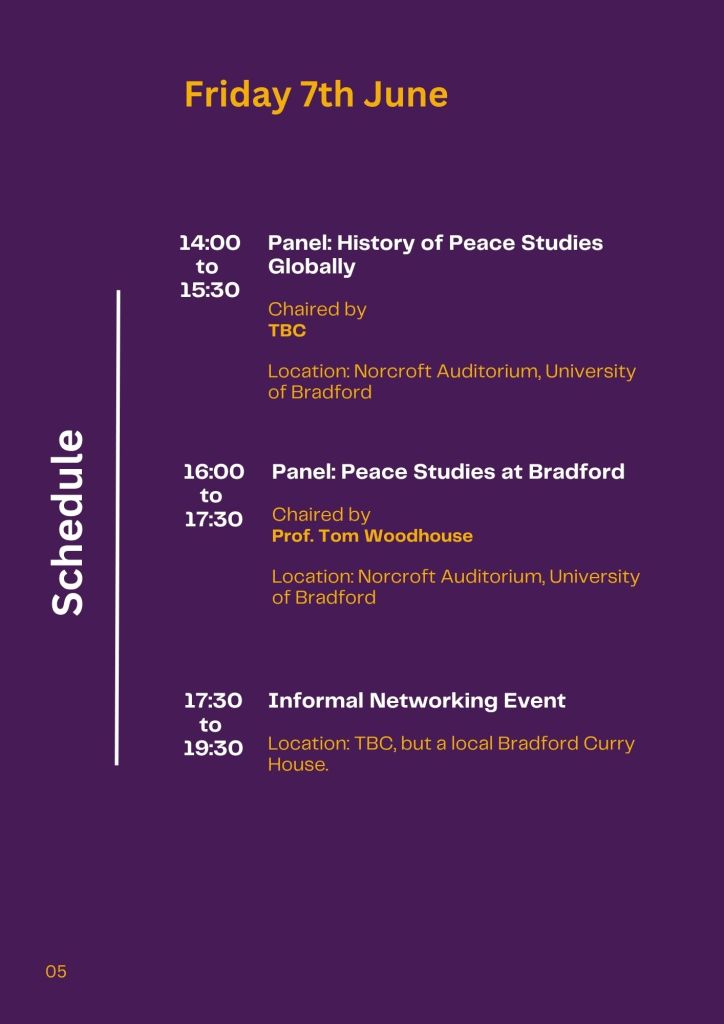
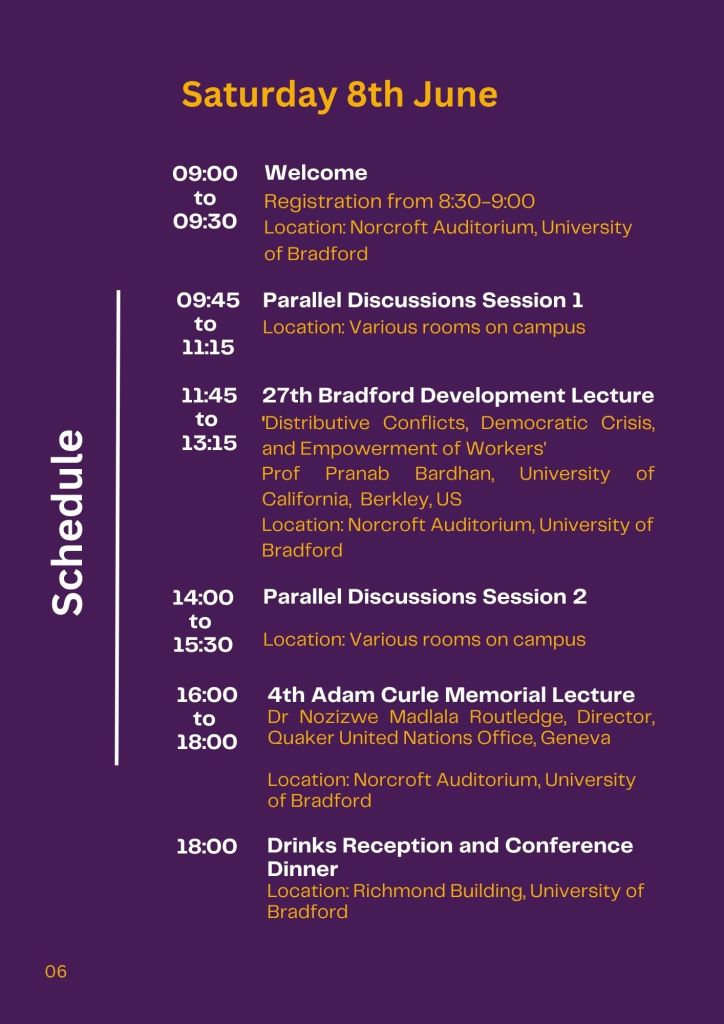
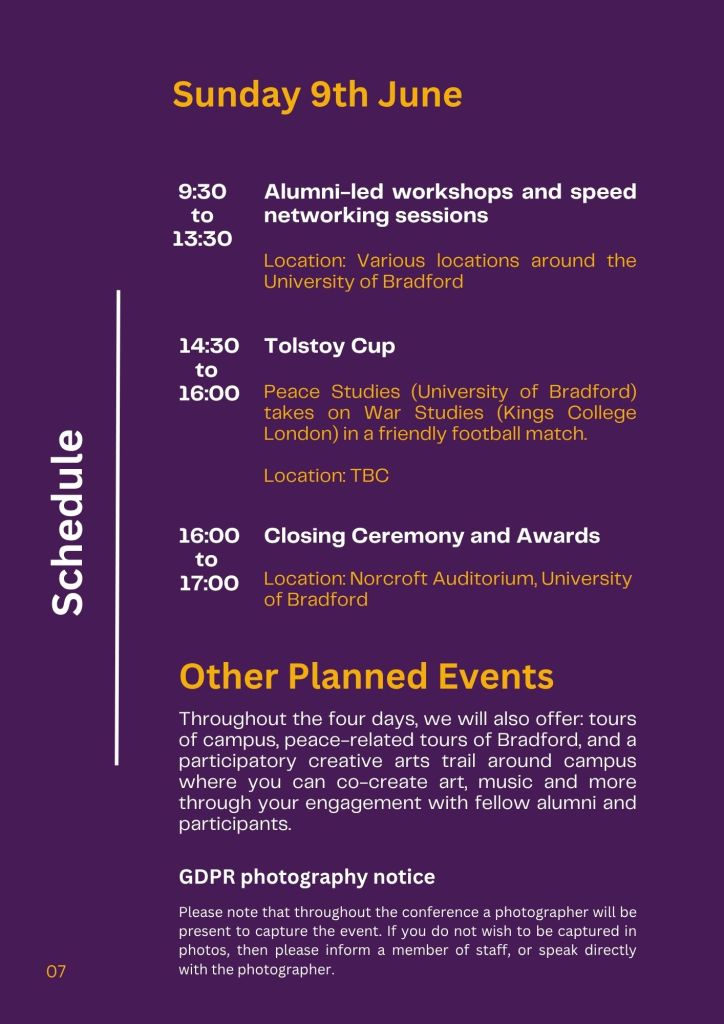
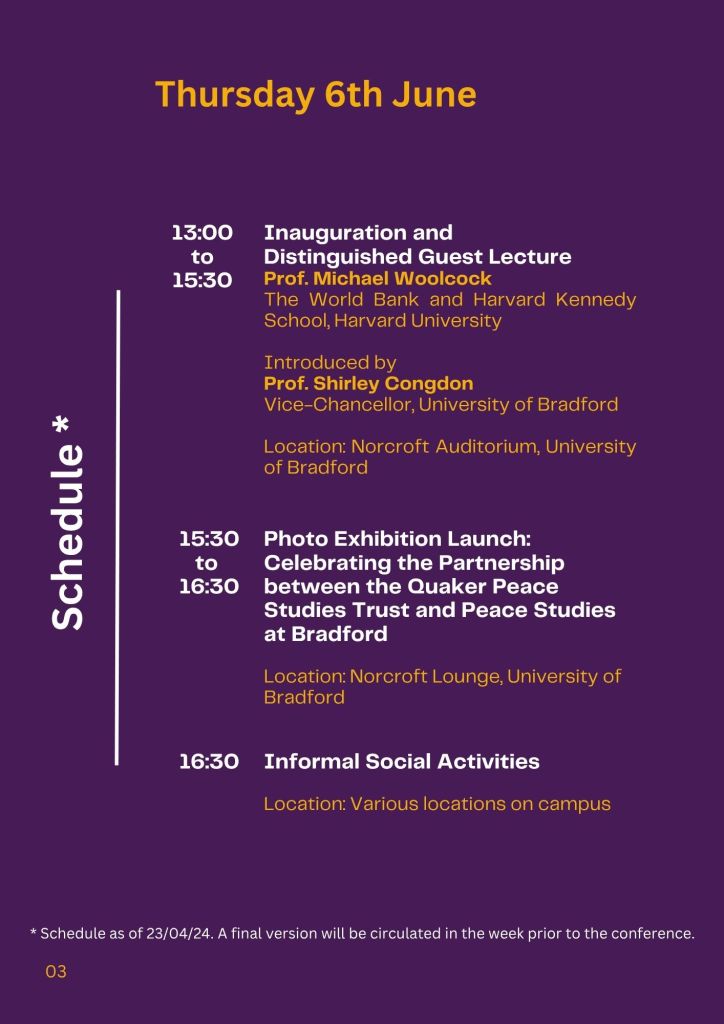
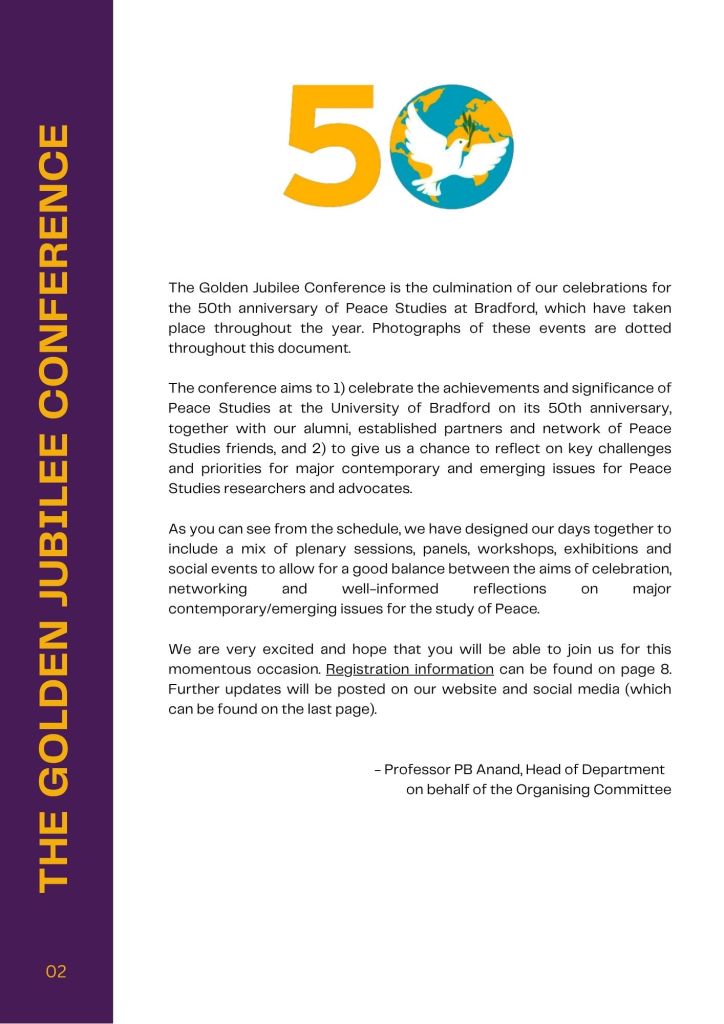
See the conference brochure for the 50th anniversary celebrations held at the University of Bradford in June, 2024